
Weed management
Key tools and publications
Identify and manage weeds on your farm
The ability to identify the major weed populations is a key component of weed management strategies. This knowledge can be used to select appropriate herbicides and devise timely application strategies.
Integrate control for effective weed management
 Properly managed weed control across rotations can reduce production costs, improve yields, limit herbicide resistance, protect water quality and enhance biodiversity.
Target specific weeds
 Effective grass weed control is essential if rotations of mainly autumn-sown crops are to be maintained.
With the threat posed by herbicide-resistant black-grass, it is crucial that growers get on top of this problem weed.
Italian rye-grass is a weed of autumn-sown cereal crops and can be more competitive than black-grass.
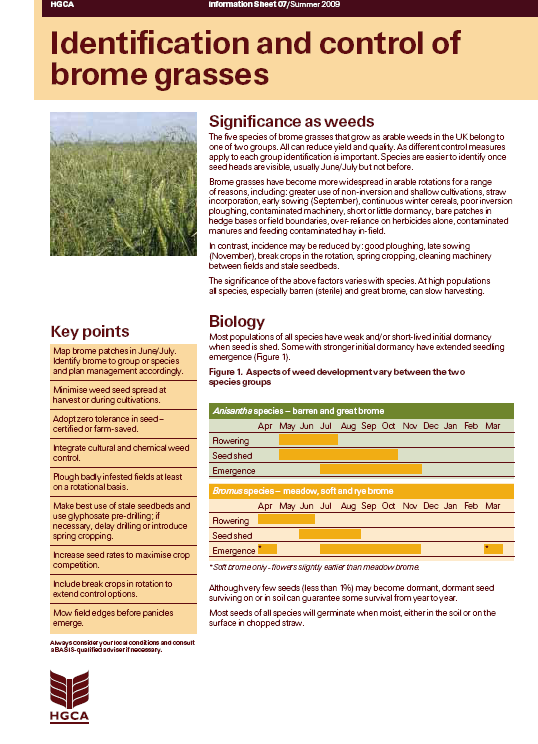
The five arable species of brome grasses all belong to one of two groups. All can reduce yield and quality. Identification is essential so that appropriate control options can be selected.
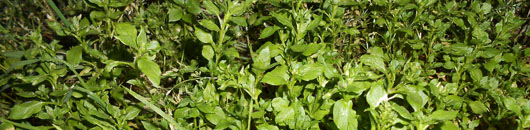
There is increasing resistance to acetolactate synthase (ALS) inhibiting herbicides in chickweed and poppy.
Improve spraying accuracy
Correct timing of sprays is essential for optimum performance of plant protection products. Timing requires a good understanding of the cereals growth stages.
Where product labels permit, selected herbicides can be sprayed at lower volumes to improve the speed of application.
Maximum weed control requires the appropriate nozzle to be selected.
In order to help preserve the range of active ingredients available for weed control – especially annual grasses in oilseed rape – it is essential that they are applied carefully.
Glyphosate applied pre-harvest can aid crop senescence and control late weed flushes. HGCA research has led to a better understanding of the effects of glyphosate application on various aspects of grain quality.
Weed Resistance Action Group
The Weed Resistance Action Group (WRAG) is a group with representatives from the agrochemical industry and institutions involved with herbicide research and policy. It aims to share information within the industry and define future research objectives.